
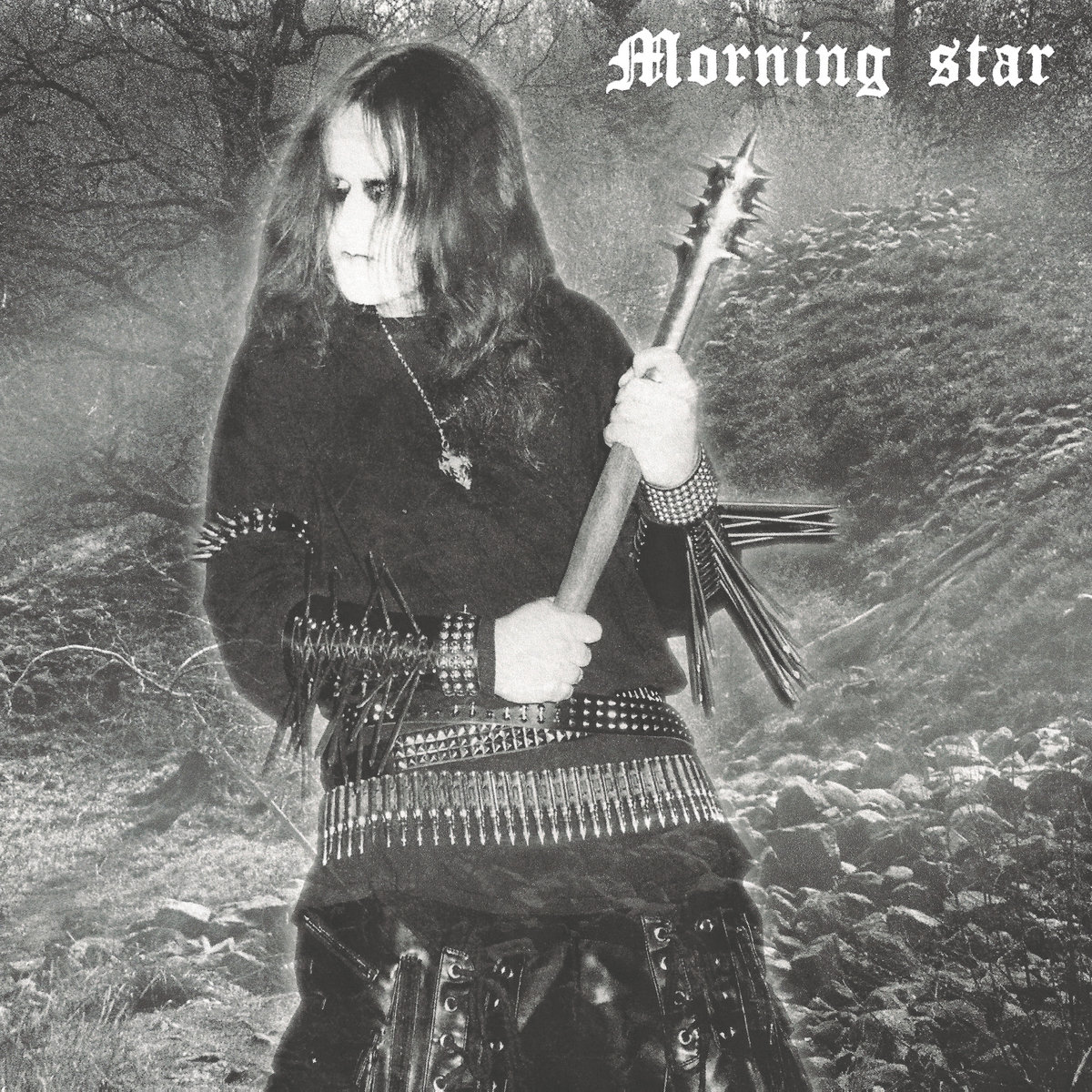
Around the time his sophomore album Pale Swordsman released in 2021, Këkht Aräkh experienced what I can best describe as a viral moment. Where most artists that have the same black metal aesthetic and rawer sound qualities stay purposefully underground and obscure, for a period of time it seemed like Këkht Aräkh was being mentioned everywhere and within musical circles that usually weren’t fans of the genre. Pale Swordsman was a compact burst of raw and depressive black metal with a bit more romantic flair to its tone, alongside quite a few songs that explored lo-fi ambient. It had some flaws, but the quality of the writing made it an album I spent a good amount of time with. Nearly five years have passed since that release, but there have been sporadic singles that pointed towards new material. This has finally materialized in the form of Morning Star, which explores more folk, ambient, and plenty of singing with guest spots from outside the metal spectrum.
The biggest take away I got from extended time with Morning Star was that sole member Crying Orc’s goal with album three was to spread outwards and explore a bit more of all the different styles that have defined his previous material. There’s still plenty of black metal here, so if you were afraid that things would shift fully towards other genres when the tracklisting mentioned a Bladee collaboration that isn’t the case. Songs like “Angest” and “Land av evig natt II” still have that very raw production and abrasive riffs that feel like they’re falling somewhere between Judas Iscariot and some of the rougher edged Norwegian albums from the 90s but compared to Pale Swordsman the tempos tend to be a bit slower. As a result, Morning Star often comes across as a bit more depressive black metal oriented with dips into the more traditional space, but the lurching bass lines and jagged guitar work remains just as interesting as before. But across its seventeen-track run Crying Orc spends just as much time exploring softer textures, as “Genom Sorgen” and “Drömsång” offer sparser acoustic guitar that gives off a darker folk vibe. There are also more dips into lo-fi ambient as well, with the title track falling somewhere between ambient and folk. It’s interesting to hear Këkht Aräkh fully embrace these elements and further solidify a unique sound, but Morning Star doesn’t always stick the landing. Part of this comes down to pacing, as the songs with minimalist instrumental work are sometimes placed back-to-back and when you combine that with some of the slower black metal it starts to drag. Plus at close to fifty minutes in length, it does come off as a bit bloated compared to the brevity of Pale Swordsman.
Këkht Aräkh caught my ear in the past due to Crying Orc’s extremely raspy screams, and there is still plenty of that to be found throughout Morning Star. As someone that likes some of the harshest and silliest sounding pitches, the vocals strike a fine balance between the two and contribute the right amount of intensity for much of the album’s run. In between these moments, the singing has been significantly expanded upon and this gives off a tone closer to Ulver’s black metal efforts. Songs like “Angest” lean fully into this, and the softer folk/ambient moments also switch over entirely to singing. Some of the pitches are likely to click with some listeners and make others bounce off the material, and I fell somewhere in the middle as sometimes the pitches fit and other times they stuck out a bit too much. As mentioned earlier, there are some guest contributions that shake things up. Spöke from VS—55 contributes more subdued and introspective singing on two of the tracks, while the Bladee feature finds the rapper opting to sing instead of rap in ways that worked better than I was expecting.
Këkht Aräkh has continued on its own path, bridging the rawer depressive and traditional black metal elements with even more folk and lo-fi ambient. It’s certainly an ambitious effort and there were quite a few moments that stuck with me over repeat listens, but it also feels like Crying Orc hasn’t fully perfected the pacing and transitions between all these different styles just yet. As a result, album three does drag when it has too many slow songs in a row and the much longer run made my attention waver by the end. The high points more than make up for it, but it doesn’t quite reach the same level as Pale Swordsman for me and I’m interested to hear how things can be further refined in the years to come. Morning Star is available from Sacred Bones Records.
-Review by Chris Dahlberg