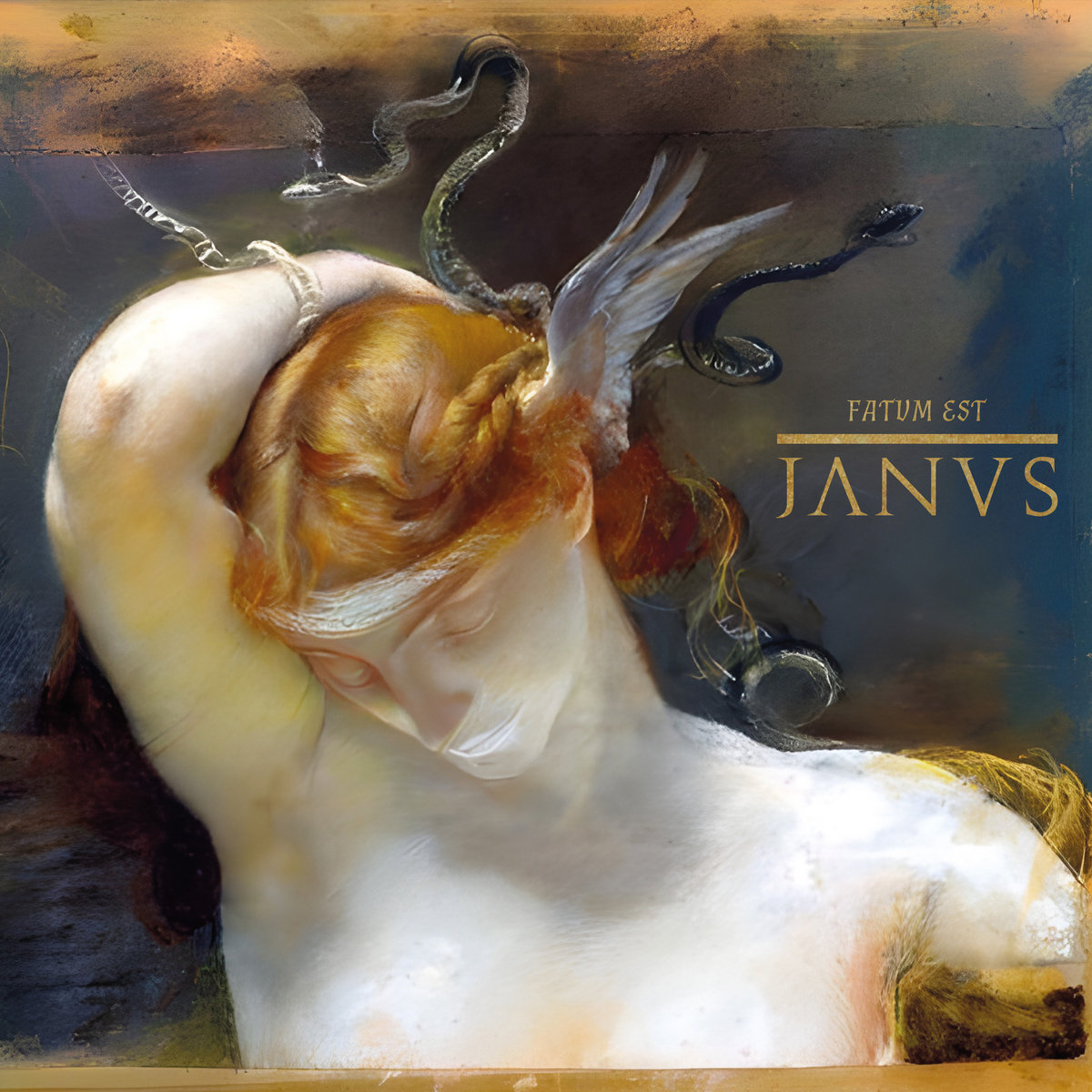
Italian black metal band JANVS originally started off with a bit more of a traditional sound, channeling equal amounts of the Norwegian sound alongside the melodic and melancholic tendencies of their home country. But with the release of Fvlgvres and Vega in 2007 and 2008, the group’s approach shifted towards more progressive structures and sweeping melodies and atmosphere that was fully integrated with the aggressive black metal. The group followed that up in 2014 with a completely reimagined version of their 2004 demo Nigredo and then proceeded to go silent for over a decade. But this year JANVS has reemerged with a new EP titled Fatum Est that feels like it picks up where the band left off and continues to refine their blend of styles.
Sometimes when black metal bands start to lean more into the progressive side of things they lose some of the aggression and jagged elements of their sound, but opener “Bucefalo” makes it clear that JANVS has retained the pummeling and powerful elements of their music. This is the most straightforward track that Fatum Est has to offer and it skews towards the melodic black metal side of the spectrum for much of its run, opting for blasting drums and jagged guitar leads that are overlaid with shimmering synths. You do get some dips into softer, introspective guitar that gives a slight chance to breathe before the wall of sound returns, but the more progressive oriented songwriting doesn’t start to appear until a little further into the EP. What you do get from the first half is some great back and forth between the powerful black metal riffing and that classic Italian sense of melodicism and mystery, as the cleaner guitar and synth elements create an entrancing atmosphere that pulls you in. “Quis Tantus Furor” is where the wilder and freer prog side emerges, as the guitar work ebbs and flows in a more fluid and frantic manner, reminding me of The Mars Volta crossed with second wave black metal as well as a bit of Ved Buens Ende. It’s one of the highlights of Fatum Est and showcases how well JANVS can balance the different sides of their sound. There are a few sections where the tonality is a bit overly jarring and the instruments seem to clash with each other a bit too much, but this doesn’t take away too much from the impact the material has.
The vocals are another area where things remain rooted in black metal’s harsher tones, as Matteo "Vinctor" Barelli has one of those raspier screams that comes through with a considerable amount of power. But even early on you’ll notice that JANVS incorporates a wider range of vocal styles beyond these screams, as “Bucefalo” has echoed growls in the background and transitions to some cleaner yelled and spoken word that give off a bit more of that folk or pagan black metal sound. “Filo d’Arianna” takes this a step further, with wilder pitches that have a bit more of an avant-garde slant and a full spoken word passage that has a more subdued and somber tone. I’ve noticed over the years that Italian black metal tends to have a naturally more expressive approach to their vocals and you can definitely hear this throughout Fatum Est, which further enhances the material.
Fatum Est isn’t as outright progressive in its songwriting as Vega, instead finding a good middle ground between some of the melodic black metal of their earlier days and the more adventurous side of their sound. The balance that JANVS continues to strike between the powerful and aggressive side of black metal and more personal, introspective ones differentiates them from some of the other artists out there, and while there are a few sections that clash this is still a strong return. Hopefully this is just the start of renewed activity and more is on the horizon, as it’ll be interesting to hear just how far the band can push things. Fatum Est is available from Avantgarde Music.
-Review by Chris Dahlberg