
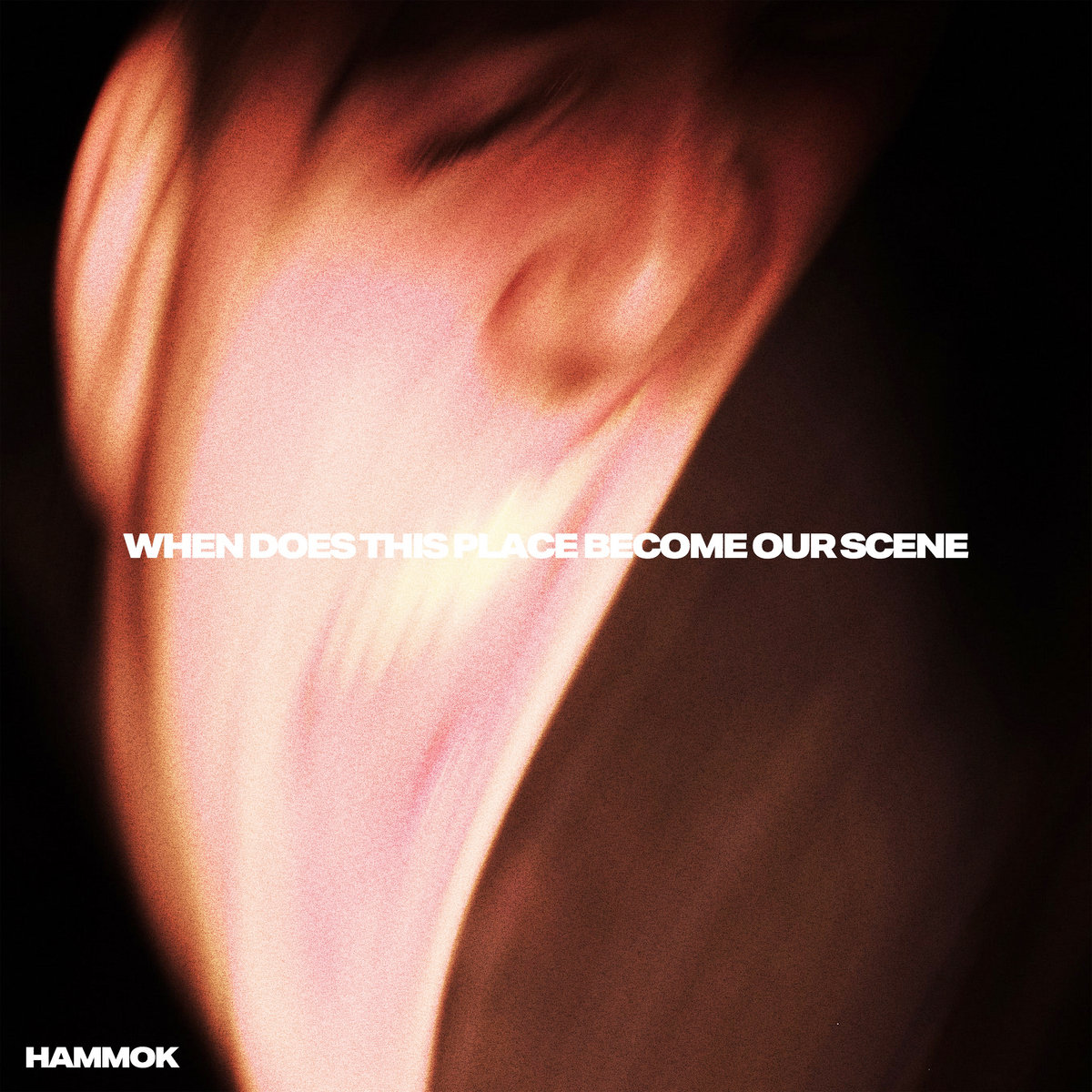
Norwegian trio Hammok may have emerged from the country’s hardcore and post hardcore scenes, but it has been clear from their earliest releases that their influences ran a lot deeper than the norm for these genres. On both their EP’s and 2024 full length Look How Long Lasting Everything Is Moving Forward for Once, the band found a space somewhere between post hardcore, hardcore, and noise rock while incorporating elements of everything from indie to post punk. For their sophomore full length When Does This Place Become Our Scene things have been taken to their next logical place, expanding upon the noisy aspects, anthemic passages, and everything in between. It’s one of those albums that has consistent energy to it but leaves you guessing as to what will come next, which results in an exciting listen from beginning to end.
Don’t let the words indie or anthemic throw you off, as while some bands that are hardcore or post hardcore adjacent have gone fully off in these directions and softened their approach When Does This Place Become Our Scene is still a very aggressive album at a foundational level. Opener “The Scene” has a bouncier punk pacing to it and a weightier, lurching bass line, but it crams both shimmering melodic textures and punchier riffs together in a short span of time. From there Hammok explores a wide range of poppy and downright chaotic approaches, ensuring that each track feels significantly different from the last. Sometimes this comes in the form of more angular noise rock (“Gooning for Free”), punk with some industrial edges (“BANG”), or somber post punk meets post hardcore (“Confidence of a Beaten Horse”). There are also other wild moments like “Groundbreaker”, where the instrumentals shift back and forth with so much noise and intensity that it gives me this The Blood Brothers and a good portion of Three One G’s roster. Where Hammok succeeds the most with this fusion of sounds is in their ability to bring together the softer end of the spectrum with these intense, almost metallic freak-outs. In the wrong hands this back and forth could clash too much and not come through in a seamless way, but that isn’t the case here and you’re just as likely to be drawn in by some of the drearier melodies as you are the moments that bludgeon you with volume and abrasiveness. Closer “For My Friends” is also incredible, as it builds to some blast beats and layers of soaring melodies and thick bass that have an immense amount of power.
Where some groups of this type have instrumentals that blur the lines between the softer and heavier side of the spectrum but their vocals stick completely on one end of the spectrum, Hammok offers a dynamic approach to their vocal performance. “The Scene” kicks things off with singing/yelling that has more of a straight-up punk feel before transitioning over to much more abrasive screaming. “Semi-Automatic Machines” keeps some of the screams but also has singing that sounds a lot more indie rock adjacent to me, and the back and forth between the two keeps things high energy the whole way through. This is another of the band’s strength, as you’ll get sung passages that have more of an anthemic, earworm quality to them one moment and then the next things shift to ear shattering screams that channel more of The Blood Brothers and the more extreme ends of the post hardcore space. “BANG” and “Groundwater” in particular are a one-two punch of some of the harshest vocals the album has to offer, but you get a slight reprieve at the beginning of “Tap Water” with more subdued and wistful singing that still transitions into a more abrasive cadence. At times I also get hints of Every Time I Die in the sheer force of the performance, but there’s a lot happening that help to give Hammok their own feel.
Hammok has left themselves with additional room to push further outwards, especially on some of the moments that have a more industrial or even no wave tone to them. But the ways in which they’ve already grown in the two years since Look How Long Lasting Everything Is Moving Forward for Once are noticeable, and the material has a lot of staying power. The balance the band finds between the post hardcore, noise rock, punk, and indie sides of the house gives them a sound that’s a bit different from some of their peers, and it results in songs that are just as likely to kick you in the teeth while you’re singing along. With the band now on Sargent House alongside The Armed they’re in good company, and hopefully that pushes them out to a wider audience.
-Review by Chris Dahlberg